Close Encounters in Palestine / Israel: The Most Colonial and Apartheid Democracy
28 March 2026
"في كوخنا يستريح العدو من البندقية... لن تنتهي الحرب ما دامت الأرض فينا تدور على نفسها!"
محمود درويش، عندما يبتعد.
"גורמי אופוזיציה סוריים אמרו ל'הארץ' שמדובר ב'תאונת עבודה' של גורמי ביטחון סוריים."
צבי בראל, עמוס הראל, ויואב שטרן, "17 הרוגים בפיצוץ מסתורי בדמשק", הארץ, 28 בספטמבר 2008.
“Now, though, some Kurds are saying actions speak louder than words.”
Wilson Fache, “Inside the Unlikely, Unofficial Ties Between Israel and the Kurds”, Haaretz, 5 December 2019.
"הברית החשאית של ישראל עם הכורדים 'מספקת לישראל עיניים ואוזניים באיראן, עיראק ובסוריה' כך אומר גורם ביטחוני בכיר, 'הקשרים בין ישראל לכורדים בעיראק הם נרחבים מכל הבחינות ולא ניתן להרחיב עליהם כדי שלא לפגוע בהם'".
יוני בן מנחם, "פעילות המוסד הישראלי בכורדיסטן", זמן ישראל, 17 במרץ 2022.
"לקראת הדיון, שהיה צריך להתקיים לפני כחצי שנה בבג"ץ, הודיעו שלושת הגופים כי הם מכפיפים את ארכיוניהם לארכיון המדינה, אך לא פירטו כיצד הם עושים זאת והיכן נמצאים הארכיונים האלה. בעקבות זאת פנה 'הארץ' אל שלושת הגופים וביקש לקבל מהם פרטים נוספים."
יוסי מלמן, "כך ייסד בן גוריון את המוסד", הארץ, 15 באוקטובר 2009.
Introduction
In December 2013, the New Yorker’s editor David Remnick interviewed Haaretz's agonizing reporter Ari Shavit about Israel’s and Zionism’s achievements and disappointments. Seven years later, on September 10, 2020, Remnick interviewed Natan Sharansky portraying him as an immortal human rights champion who stood up against the evils of the former Soviet Union until realizing emancipation by joining the colonization of Palestine, a chapter absent during the triumphalist discussion shaped by Masha Gessen’s many years of writing in Remnick’s publication. Remnick's admiration of Sharansky can be found also in his 1997 article that sidelined Israel’s domestic accusatorial terrorism of the 1990s (he ignores the known constant foreign terrorism of the beloved country)[1] hailing its population despite the country’s government. In September 2025, during Israel’s genocide in Gaza, Remnick participated in a conference held in New York, organized by Haaretz newspaper and the American Jewish Israeli Zionist philanthropy, the New Israel Fund, intending to explore ‘the future of Israeli democracy’ with the participation of Hadash Knesset Member Ayman Odeh, who deserves the unflattering superlative of the ultimate pessoptimist.
This essay could have been about David Remnick and what is falsely termed as American Jewish liberal Zionism. It is not. Rather, its purpose is to trace Israel’s coloniality and apartheid in the wake of its genocide in Gaza. The idea for this essay was triggered before the onslaught on Gaza, following two reports by Human Rights Watch in April 2021 and Amnesty International in February 2022, concluding that Israel is practicing apartheid against Palestinians in the entirety of historic Palestine. Given the incompleteness of the reports’ research and findings despite their thoroughness, the current essay is necessary.
Coloniality
Zionism’s founder Theodor Herzl discovered the ideology pursuant to the Dreyfus affair. Both Herzl and Dreyfus were well-established assimilated European Jews. Herzl a journalist in Austria and Dreyfus a military officer in France. Herzl’s proposition was that Dreyfus had been framed because of his Jewish faith. His conclusion was far-fetched, the necessity of a distinct Jewish state for Jews, one option being Palestine, at the time overwhelmingly populated by Palestinian Arabs under Ottoman rule, who subscribed to a multifaith demography and reality. Domestic politics in Vienna also played a role in Herzl’s epistemological shaping as well as rising antisemitism in central and eastern Europe.
Herzl conveyed his worries to Albert Rothchild, [2] part of the Rothchild ancestry that its member Lionel Walter of Britian[3] obtained the colonial Balfour Declaration of 1917 according to which “His Majesty's Government view with favour the establishment in Palestine of a national home for the Jewish people, and will use their best endeavours to facilitate the achievement of this object…”. Colonial Britain transformed this obscure and unbinding declaration into a legal framework by incorporating it into the preamble of the 1922 League of Nations mandate over Palestine. At the time of the Balfour declaration and its 1922 incorporation, Jews in Palestine formed no more than 10% of the total population. Britain had no right to grant the declaration nor include it as an official commitment in the 1922 mandate. The Palestinian population opposed it and consider it to this day as a decisive historical juncture in their ongoing political predicament.[4]
Wealth, political power, and colonial discourse have served Zionism to realize its goals. Without them, the irrational ideology could not have advanced its goals and accomplished the formation of a political entity far from the origin of its future inhabitants. Nevertheless, its pseudo nationalist colonial socialism has attracted figures from the Anglo-American left for many years. Herzl’s own vocabulary about the viability of Zionism in Palestine was overwhelmingly colonial, aligning with the language of his time, despite his original purpose to be liberated from European politics. Zionists in the late 19th century also approached Germany to advise the Ottomans about the conceivability of a Jewish state in Palestine given their close relations and because antisemitism was more prevalent in Germany, rather than in France and Britain. The effort was not successful as the Ottomans rebuffed the notorious idea.[5]
In Palestine, Zionist arrivals mainly from Eastern Europe and Russia formed agricultural settlements to gradually expand and take over as much land as possible. David Ben – Gurion was no less colonialist and orientalist than Herzl, eager to dominate as much land as possible and denying the existence of another people in Palestine. In 1931, the future founding figure of Israel wrote that although there is no actual ‘Land of Israel’ as a political reality, its borders nevertheless extend to reach parts of today’s Lebanon in the north, Syria in the north east, and Jordan in the east. Ben Gurion considered his analysis of the desired borders of the anticipated Jewish state as a scientific one not detached from prescriptions of the Jewish faith and mythology about the nature of the ‘Land of Israel’.
Notwithstanding Zionist terrorist activity both by the mainstream Haganah force and the Irgun against the British in Palestine, some during the decisive period of the Second World War that witnessed Zionist collaboration with the Nazi regime in Germany especially by the Lehi faction, limiting Jewish immigration to Palestine, and Britian’s abstention at the United Nations’ vote on the unjustified partition plan, it is impossible to absolve the colonial country from producing an apartheid dispossessing state.
Herbert Samuel, who lobbied on behalf of Zionism in Britain, was appointed in 1920 as the High Commissioner for Palestine, the practical ruler of the foreign mandate, two years before the mandate was actually put in place. Samuel occupied his position until 1925. In 1915, he authored a memorandum titled The Future of Palestine, demonstrating his geopolitical ambition during the First World War, claiming at the outset with unmatched historical confidence:
The course of events opens a prospect of a change, at the end of the war, in the status of Palestine. Already there is a stirring among twelve million Jews scattered throughout the centuries of the world. A feeling is spreading with great rapidity that now, at last, some advance may be made, in some way, towards the fulfillment of the hope and desire held with unshakable tenacity for eighteen hundred years, for the restoration of the Jews to the land to which they are attached by ties almost as ancient as history itself.[6]
Orde Wingate’s British militarism captures the repellent rule manifested in the suppression of the 1936 – 1939 Great Revolt by Palestinians, completing the approach of another Zionist High Commissioner of Palestine Arthur Wauchope.[7] The latter was admired in Chaim Weizman’s appeal to resolve the Jewish refugee problem in Europe by settlement in Palestine, framing the project in colonial and nationalist socialist terms in the American journal Foreign Affairs, hoping to capture the hearts and minds of the political dynamics of the ‘great international powers’ of that day. Weizman rejected other ideas about resolving the humanitarian issue, building on the nature of the illegal 1917 Balfour Declaration, proposing to relieve hosting states from the burden of their ‘generosity’.[8]
Wingate is adored to this day by Israelis and other Zionists, not less than Herbert Samuel, for his contribution to forming Israeli military tactics and organization that culminated in the ethnic cleansing of Palestine.[9] Streets and institutions are unsavory named after both causing unfettered dismay. The ethnic cleansing of more than two-thirds of the Palestinians was planned and intended by the Zionist Yishuv’s leadership in Palestine and welcomed by its community. The assassination of United Nations envoy Bernadotte, notwithstanding his unwarranted proposals to the Jewish Yishuv given its atrocious crimes, provides another illustration of Zionism’s actual intention. Attributing this act to a marginal Zionist organization is pure diplomatic maneuvering, considering the failed investigation of the murder,[10] and Ben - Gurion’s welcoming of at least one of the co-perpetrators of this crime.[11]
In the aftermath of Palestine’s mass displacement and the formation of Israel, the Israeli government and Israelis commenced a large-scale project of property theft and geographic redesign of Palestine.[12] Attorney General Haim Cohen oversaw this effort and the enactment of the Absentees Property Law – 1952 and Basic Law: Lands of Israel. The Jewish National Fund played a key role in transforming the ideological aim into reality.[13] Both are missing from the ordinary and ‘critical’ historical record. It was part of the primary aim of Zionism to redeem the ‘Land of Israel’.[14] Movable and immovable property belonging to ethnically cleansed Palestinians were appropriated by Israel through legislation, governmental policy, Supreme Court jurisprudence, sheer manipulation, and ordinary theft.[15] In 1999, the Israeli Ministry of Foreign Affairs proudly published on its website an essay explaining the rationale for Zionist colonization that presented it in audacious, modern, and capitalist/agricultural terms, concluding:
Of the institutions that turned land redemption from a Biblical-sounding slogan to a reality, one remains large and influential: the Jewish National Fund. Now in its tenth decade, it has evolved into Israel's largest land-development agency, with leading roles in afforestation, development of land, and agricultural and environmental R&D. It attracts roughly $100 million per year in donations as well as $600 million per year in revenues of the Israel Lands Authority. It continues to carry out its original mission: perpetuation of Jewish national ownership of land in the Jewish national home.[16]
Zionism’s fulfillment by Israel is therefore strictly colonial.[17] The theory and practice are deficient and objectionable. For decades, the declared strategy has been land colonization (Yishuv Ha-aretz). Internal tensions within the Israeli Jewish community, chiefly between Eastern European Jews and Mizrahi Jews, have not tackled the ideology and method, nor have they caused any straying from them, on the contrary.[18] Eastern European religious Zionism sustained this phenomenon in the 1967 occupied territories (East Jerusalem, West Bank, and Gaza), starting with the Mapai / Labor governments' land redemption implementation.
Apart from Israel’s land regime, which constitutes a major element in Israel’s apartheid, the country’s geographic composition is premised on a colonial framework. The Kibbutz, the Moshav, and entire towns are purposed to secure control of land, prevent demographic continuity (and any genuine development) from Palestinians in Israel, quash a possible just solution to the Palestine Question, and contribute to Israel’s purported security goals.[19]
Palestinians in Israel reside in the north, the center, and the south of the country. The planning of the public space applied to them during the military regime (1948 – 1966) and after is the same one exercised in the 1967 occupied Palestinian territories. To maintain the unpersuasive distinction in past and present policies based on the artificial and nonexistent green line is an ongoing intellectual travesty serving Zionism’s unjustified aspirations. Israel’s and Zionism’s coloniality are still in place, studied vividly by the late Elia Zureik. Like all of his fellow 'foreign' Palestinian intellectuals, Zureik continues to be removed from Israeli academic knowledge production.
There are 262 Kibutzim[20] in Israel populated by 205,000 people.[21] In addition, there are 255 Moshavim[22] and 59 cooperative villages averaging 750 persons for each. They are part of Regional Councils that have jurisdiction over and control significant areas of land despite their low numbers.[23] Further, Entire towns were built with the specific intention to serve the purpose of ‘Judaization of the Galilee’: Migdal Ha-Emek in 1953, Nazareth Illit (subsequently Nof Ha-Galil), and Karmiel. The construction of these towns supplemented Zionism’s and Israel’s depopulation of Palestine, forming the country on its ruins from Kiryat Shmona and Haifa[24] in the North, through Tel-Aviv[25] and Jerusalem[26] in the Center, reaching Ashdod and Be’er Sheva in the South.[27]The New York Times’s reporting about a single aspect of these policies was habitually normalizing.[28]
Since 1967 and the occupation of East Jerusalem, the West Bank, and Gaza, Israel’s colonization has extended to these areas. The Zionist messianic ideology of land redemption and vast economic incentives continued to capture the minds and interests of Israeli Jews, irrespective of whether they practiced religious traditions or not. Israel’s de facto annexation of East Jerusalem was condemned by United Nations Security Council resolutions shortly after its introduction.[29] Israel’s Basic Law: Jerusalem Capital of Israel of 1980 was declared void.[30] All settlements established in East Jerusalem, the West Bank, and Gaza are illegal under international law, as is the wall constructed based on Israel’s accusatorial terrorism of the early 2000s.[31]Israel’s occupation as such in these areas is also a pervasive illegality that conforms to an apartheid system.[32]
Apartheid
Israel’s apartheid in East Jerusalem, the West Bank, and Gaza is undisputed. Key elements of this regime have been articulated in the reports of Human Rights Watch and Amnesty International constituting a crime against humanity. This regime persists even after the Oslo Accords of 1993, understood by Israel as establishing a Palestinian Authority that stems its governing powers from the ruling Israeli commander as an occupying power, by now declared as an illegal concept by the 2024 International Court of Justice Advisory Opinion.[33]
The Nation – State justification for Israel is false because of its colonial history and consistency. It is an attempt to grant the illegitimate quest of Zionism, realized by brute force a sense of moral grounding by substituting history with selective and necessarily denying philosophizing. This attempt gains preposterous magnitude when it incessantly disconnects Palestinians in Israel from their actual peoplehood, transforming this large in number community into an abstract and apolitical assortment of individuals named ‘Israeli Arabs’, ‘Arab minority’, or even ‘Palestinian citizens of Israel’. The collaboration of certain Palestinian academics, politicians, and activists with this unfounded framework is a testament to their poor judgment and intellectual capacities, their own domination by the various Israeli institutions, and a result of their community’s specific, unflattering history. We shall elaborate on these issues more.
John Quigly pioneered the argument in the American academic arena that Israel is an apartheid state based on its ideology, discriminatory laws, and practices that substantiate an intent to subdue Palestinians in Israel to an inferior status.[34] His argument is tenaciously solid and lasting, gaining enhancement from Israel’s persistent discriminatory laws and policies as well as its insistence on pursuing the ideology of Zionism that is by definition, exclusionary in whatever theoretical or practical terms it is considered and exercised.
In 2018, the Israeli Knesset enacted Basic Law: Israel – The Nation State of the Jewish People. The legislative act has a constitutional status that proclaims Israel’s understanding of itself for decades as a Zionist exclusivist state, no less than a colonial and apartheid state. Article 1:
(a) The Land of Israel is the historical homeland of the Jewish People, in which the State of Israel was established.
(b) The State of Israel is the nation-state of the Jewish People in which it realizes its natural, cultural, religious, and historical right to self-determination.
(c) The realization of the right to national self-determination in the State of Israel is exclusive to the Jewish People.
Israel’s Jewishness is inherently tied to Jewish communities around the world, irrespective of their citizenship and cultural backgrounds. Article 6:
(a) The State shall strive to secure the welfare of members of the Jewish People and of its citizens, who are in straits and in captivity, due to their Jewishness or due to their citizenship.
(b) The State shall act in the Diaspora, to strengthen the affinity between the State and members of the Jewish People.
(c) The State shall act to preserve the cultural, historical, and religious heritage of the Jewish People among Jews of the Diaspora.
Zionist colonization is a Jewish imperative according to the constitutional Basic Law. Article 7:
The State views the development of Jewish settlement as a national value, and shall act to encourage and promote its establishment and consolidation.
This Basic Law simply narrates Israel’s apartheid conduct since its founding. Before its enactment, other Basic (i.e., constitutional) and ordinary laws defined Israel’s inherent racist nature. Basic Law: Israel Lands, covering more than 90% of the land in the country articulates it in a perspicuous, exclusionary manner. Article 1:
The ownership of Israel’s Lands, which is the real estate belonging to the State, the Development Authority, or the Jewish National Fund, shall not be transferred, whether by means of sale, or in any other manner.
The Law of Return of 1950 and the Nationality Law of 1952 grant every Jewish person in the world the right to immigrate to Israel and become a citizen immediately. Neither law mentions persecution or hardship as a justification for the right of arrival/immigration (Aliyah) and citizenship. Needless to say, religious background, hardship, and even persecution do not generate a right for immigration, citizenship, and superiority as is the case in Israel. At most, persecuted individuals in other countries have a right to seek asylum in a different country. 1948 and subsequent Palestinian refugees who are subjected to a separate humanitarian regime under UNRWA, constitute an exception as they enjoy a right of return consistently violated by the Israeli government and its Zionist ideology grossly projected by the two laws of Return and Citizenship.[35]
Governmental administration directed at Palestinians in Israel is undisputably prejudiced. The educational system is controlled, monitored, and underfunded. Land and housing plans are designed to prevent prosperity and geographical continuity. Higher education steers towards marginalization and lack of access to meaningful employment. Their number is significant, and their effective political organization could alter the justification for Zionism and Israel. Governmental strategy, therefore, leads to preventing this option, also by utilizing the distraction of tactical criminality.
Israeli political and legal cultures are immune to serious constitutionalism, civil rights, and human rights. Zionism’s supremacy is at the heart of the standard racist politician rhetoric and the diplomatic protectiveness of the domestically learned Supreme Court Judge.[36]
Thought and Rights
Two strands of thought continue to dominate Zionism in the entirety of historic Palestine from its inception to this day. They can be attached to two figures, David Ben Gurion (Mapainisim from Mapai) and Ze’ev Jabotinsky (Betarism from Betar). Their common features dominate their differences. They are messianic beliefs in the Jewish People’s entitlement to the ‘Land of Israel’, negation of Palestine and its people, the need to rely on brute force when dealing with their colonized geography and presence, and distrust of foreign powers, notwithstanding tactical or strategic alliances. Mapainism may include aspects of some awareness of international diplomacy that Betarism tends to ignore. Jabotinsky’s 1923 Iron Wall is a Zionist consensus and a reasonable depiction of the nature of opposition to Zionist colonization and presence in Palestine. The Zionist Heder (Jewish religious study room) as a metaphor for Israel or Shevet (tribe) is comprehensive, stagnant, and unregretfully unreachable.
Mapai dominated Israeli politics, culture, and resources until 1977. It stretched from Tel – Aviv to the Kibbutzim and Moshavim. From the ‘city’ to the ‘village’ in Israeli Hebrew terminology, using the Histadrut (Zionist Labor Union) to dominate Mizrahi Jews.[37] Mapai’s social structure was composed primarily by Eastern European Jews. The practical loss to Egypt in the 1973 war shook the foundations of traditional Israeli Zionism. Together with the Mizrahi Jews' ongoing resentment, Mapai’s ideology lost in 1977 to Betar’s. Likud rose to power with populist sentiments towards receptive Mizrahi Jews. Since then, both ideologies joined forces in ruling the country, despite some debates along the road, usually centering around the Religious Orthodox Jews’ standing, governmental appointments, and benefits. Israel’s demography and epistemology in terms of background and religious beliefs defy its efforts to project a certain form of a country to ‘Western audiences’ and ‘civilization’, usually to the center right of the politics of this non - monolithic geopolitical sphere, with the exception perhaps of the United States and its elites at the Democratic party and academic institutions’ governance bodies.
Israeli society was naturally fully committed to the founding of the state and its intellectual endeavor to demonstrate its legitimacy despite its geographic location. Archeology played a predominant role in this effort, where an extravagant scientific digging of the past attempted to project confidence in Zionism’s claims internally and to foreign readers.[38]Mapainism produced a closed society firmly attached to and cherishes its security services. Avishai Margalit’s 2019 portrayal of Amos Oz’s ‘admirable’ militarism is a significant demonstration of the constant Mapai ideology theme in Israeli society.[39]
During the 1980s, some critical research emerged contesting the common and intellectual knowledge about Israel’s lasting righteousness. Most notably, the incomplete book by Benny Morris about the emergence of the 1948 Palestine refugees. The claim is that Morris’s military service stirred his conscience.[40] The Israeli experience in Lebanon in the 1980s, possibly the massacre in the Sabra and Shatila Palestinian refugee camps, may have contributed to Morris’s tentative awakening. The incomplete and diplomatic Israeli inquiry of this massacre by the Kahan Commission has yet to be researched by any kind of historian: new/critical, or customary. Morris’s retractions or explanation of his research asserting no intention and actual culpability among Israeli forces and their leadership in 1948 is the same approach undertaken by the Kahan commission. Impunity can also be traced to the 1956 Kafr Qasem massacre.
Morris’s pitfall pendulum argumentation characterizes the limited thought dubbed as post – Zionism. Confined to the Israeli academic scene, this phenomenon neither genuinely shifted thinking in the Israeli university nor affected social trends in Israeli society. It also failed to capture the Zionist Yishuv behavior before 1948. The ousting of Moriss’s one-time colleague and subsequently scholarly rival, Ilan Pappe from Haifa University is a surrealistic demise of an attempt at genuine knowledge production that is not part of Mapai’s longing for survival.
Tom Segev is associated with the ‘different historians’ trend. Writing also in Haaretz, the scope of his concealment is not surprising. Segev published a book in 1991 about Holocaust memory in Israeli society at the peak of the 1987 – 1992 unarmed Palestinian uprising in the 1967 occupied territories (East Jerusalem, West Bank, and Gaza) that witnessed mass murder, systematic torture, arbitrary collective arrests, and common administrative detentions. No serious Israeli historical research has been made about this period, which included Rabin’s direct and explicit order to break the bones of unarmed demonstrators. The connection between actual historical events and Segev’s research preferences is only circumstantial, of course. The quashing of the early 2000s Palestinian uprising will have to wait several decades for a potential Israeli discoverer seeking revelations of protocols. No discussion of Israel’s accusatorial terrorism of the 1990s and 2000s will be mentioned despite the clear messaging in Israeli newspapers’ headlines to reassemble into the Israeli Jewish clan.
There are additional, not less glaring, indications regarding the fragility of the short-lived ‘post – Zionist’ thought. It can be found in the contradictory attestations advanced by Hebrew University colleagues Zeev Shernhell and Shlomo Aronson. While Sternhell tried to dismiss in 2010 in the New Left Review critical historical research as a disproportionate adherence to findings that have been absorbed in a mature society, Aronson already alleged in 2003 in Israel Studies that ‘post – Zionism’ is not necessarily new, distinguishing between its strands and concluding that it has actually strengthened the ‘right’ in Israel. Jurisprudence scholar Chaim Gans’s attempt to contemplate Zionism’s and Israel’s legitimacy in philosophical contours is based on selective facts and the misuse of philosophical abstractions. Regardless of their purported sophistication, Sternhell’s and Gans’s expedition towards foreign academic audiences, particularly in the United States and Britain, with their justifications to Zionism and Israel, is the symptomatic role traditionally attributed by Mapai to the Israeli academic. It seems that Israel’s only intellectual salvation is to avoid actual history, induce a comfortable and misleading one, and resort to unsuitable philosophical generalizations.
In the aftermath of their Israeli-caused calamity in 1948, Palestinians ceased to exist as a people, having been dispersed through ethnic cleansing regionally and globally. They became a mere humanitarian matter for international agencies’ occupational treatment. The genesis of their liberation movement in 1965 revitalized a robust intellectual and research activity, even if the most significant Palestinian research center, the Institute for Palestine Studies, was formed two years earlier, enjoying the tender hospitality of oppositional Beirut and Lebanon. The unfinished struggle for Palestine liberation contributed ample sacrifices, reaching the deadlock of the Oslo process in 1993. Its adversaries were countless. From Israel, the United States pushed by large segments of its influential American Jewish community, and America’s allies in Europe, to the competing visions of Arab governments.
The liberation movement was neither unadulterated nor without error, but it was genuine that believed in the need to overcome the inherent injustice caused to Palestine and its people by Zionism, Israel, and their allies. In its orbit operated significant scholarly production such as Anis Sayigh’s Research Center, whose archives were systematically pillaged during Israel’s invasion of Lebanon in 1982,[41] Mahmoud Darwish’s literary journal Al-Karmel, and Ghassan Kanafani’s Al-Hadaf.[42] Since the early 1970s, individual academics in the United States have gradually generated a serious body of work contesting the dominant vision advanced by American politics, culture, and the academy, where the fingerprints of Israel’s supporters have been difficult to conceal.
The minor segment of the Palestinian people, less than one-third, that was not ethnically cleansed outside the country, did not constitute a meaningful political phenomenon. The opposite is true. During the military regime of 1948 – 1966, there were political parties closely aligned with Mapai seeking favor devoid of any concept of rights. Some in the non-Jewish leadership of the Israeli Communist Party (ICP) proposed as early as 1951 to conscript Palestinians in Israel to the Israeli army. The Israeli flag was ordinarily raised on the first of May marches of this party in Nazareth and elsewhere. The small Al-Ard Society could not overcome these two formidable forces, the collaborative and the contained, to form a genuinely different political modality.
ICP led the politicized voice of Palestinians in Israel for decades, with sustained suppression of Palestinian Arab identity regardless of its inclination. It was lamely justified because this identity was a deviation from non – nationalist universal communism. Even Mohammed Miari’s fundamentally soft Palestinian nationalism was vehemently rejected by the ICP.
Together with Herut (major part of today’s Likud), the ICP was considered by Ben Gurion as an outsider to the accepted politics of the state. Ben Gurion’s famous slogan was ‘without Herut and Maki”. By natural extension, Palestinians in Israel who were under a military regime were not part of the newly established polity. This statement alone by Ben Gurion quashes the Israeli not-so-innocent academic argument that Israel’s Declaration of Independence is a solid basis for a decent constitutional framework, even if all segments of the Jewish Yishuv in Palestine signed it, including a representative of the ICP.
Extremely marginal in numbers and working from Tel-Aviv, the ICP’s effect on the politics of the Palestinians in Israel, mostly rural and dispossessed communities, was devastating. The ICP’s internal desire was to be accepted by Israeli politics, notwithstanding its criticality. Its eyes were always on the closest ‘socialist’ Zionist model Mapam, an almost ideological mirror of Mapai. It placed Palestinians in Israel between the hammer of Soviet communism and the anvil of Mapainism. The repercussions were unfathomable. The emergence of Hadash in the late 1970s as a progressive deviation from the ICP but in close structural bond with it could not resolve the ongoing impasse, particularly given the nature of the dominant features of Israeli society and politics.
So, for example, if Zehava Galon, formerly of B’Tselem says as an instruction to local Palestinian politicians, not a critique, that Israelis do not think about Palestinians, this becomes a relevant and practically decisive position. According to Avishai Margalit, the task of ‘Arab’ leftists (Arabism here is always in negation to Palestinian) is to join Jewish leftists and save Israel from the image of apartheid. That is, to continue the Mapai aspiration and heritage. The obligation is not to confront and eliminate apartheid, recognize Zionism’s injustices, and strive for a decent political reality, but rather to save Israel from the specter of being considered an apartheid state, which it has been since its founding. The Margalit – Walzer alliance, contrasting knowledge production about Palestine in the United States, is a reasonable explanation for Margalit’s local politics. The resolute spirit model of the Abu Lughods, the Khalidis, and the Saids is truly haunting and necessarily commendable.
Notable Palestinian figures within the ICP and Hadash, Such as Emile Habibi and Tawfiq Ziyad, could not affect the strict politics of both bodies that listened first and adapted to the prevailing direction of Israeli Jewish society. While Emile Habibi had suffered for decades from his personal original sin complex, given his inexcusable performance during the 1948 war, Ziad’s ambivalence and vagueness towards Zionism due to his official position as Mayor of Nazareth, nullified his emotionally charged poetry. Habibi’s original sin ought to be the explanation for his stubbornly appalling cynicism and essential lack of belief in liberation and opposing Zionism, reflected in much of his literary and journalistic work. The persecution during the military regime period did not justify the embarrassingly bombastic poetic claim leveled against ethnically cleansed Palestinians about the steadfastness of those who ‘did not leave’ as opposed to the ‘departure’ of the dispossessed.[43]
In the mid-1990s, members of ICP / Hadash left their political organization and joined forces with others in Palestinian society in Israel. They sought to advance a different political agenda, proposing to transform Israel into a state of all its citizens and grant Palestinians in Israel a certain type of cultural autonomy. The intellectual/political program fell tremendously short of the entitlements of Palestinians in Israel and elsewhere. They avoided theorizing and politicizing around Israel’s actuality as an apartheid and colonial state. Its rights discourse[44] became confined to what the Israeli Knesset permitted. The party’s leader Azmi Bishara, who pervasively situates himself in European thought despite his peasant origins from Tarshiha and Nazareth, language skills, and troubling methodology,[45] made irresponsible declarations about Palestinian concessions in the Knesset without consultation or authorization that, if carefully studied, would place him in a very unpleasant political location. Azmi Bishara’s significant political contribution is no more than demonstrating, once again, the futility of official Israeli politics to the meaningful and minor issues that affect the lives and rights of Palestinians in Israel, the 1967-occupied Palestinian territories, and abroad.
Conclusion
Israel’s status as a colonial and apartheid state is enduring. On both sides of the green line. Its coloniality and apartheid were since its founding, extending Zionism’s cultivation in Palestine. The country’s ideology and social formations have not grappled with Zionism’s essential incongruity and horrendous injustices, but rather reproduced them with necessary fatal strategic consequences. Zionism never had the right to sovereignty in Palestine. It fails to demonstrate a justification for it 78 years after Israel’s establishment.
Israel’s obsession with demography and the realization of Zionism by any means necessary blinds it from the fact that in historic Palestine, there is no Israeli Jewish majority, not counting Palestinian refugees who have a right to return. The road towards peaceful coexistence starts with the basic proposition about Zionism’s impertinent structure and nature. Acknowledgment of its perpetually calamitous wrongs towards Palestinians, the prosecution of Israeli war criminals, restitution, and reparations are indispensable requirements. Once Zionism and Israel cease to exist and a decent constitutional system is constructed, Palestinians may obtain the justice and peace they have been entitled to for decades.

Herbert Louis Samuel. Source: Britannica.

Ben Gurion and one of Bernadotte’s assassins Yehushua Cohen. Source: Uri Milshtein, “Did Ben Gurion Obstruct Bernadotte’s Investigation”, Maariv online, 25 August 2018 (Hebrew).
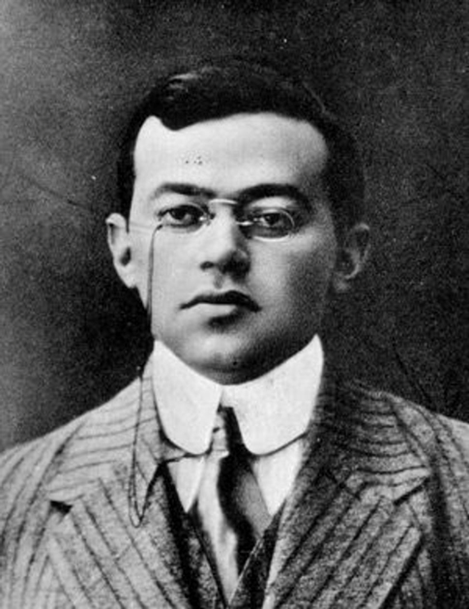
Ze’ev Jabotinsky. Source: The Forward, 25 August 2010.
[1] It is indeed plausible to reduce Israel to a wicked covert killing machine that deserves no less than diplomatic, economic, and academic banishment for the purpose of dissolution. For examples of Israel’s 1990s terrorism, see Serge Schmemann, “Suicide Bomber Kills 5 in a Bus Attack Near Tel Aviv”, New York Times, 25 July 1995; Serge Schmemann, “Bus Bombing Kills Five in Jerusalem; 100 Are Wounded”, New York Times, 22 August 1995. As to Haaretz, it is worthy of the ‘newspaper of death’ title.
[2] Henry Cohn, “Theodor Herzl’s Conversion to Zionism”, 32(2) Jewish Social Studies, pp.101-110 (1970).
[3] See The Rothchild Archive, available at: https://www.rothschildarchive.org/genealogy/
[4] See Joe Stork, “What Happened to Palestine”, 1(2) Journal of Palestine Studies, pp.105-108 (1972).
[5] Rashid Khalidi, The Balfour Declaration from the Perspective of the Palestinian People, Lecture at Columbia University, 2 November 2017; Joe Stork, “Understanding the Balfour Declaration”, 13 Merip Reports (1972); Isaac Husseini, “From the Arab Stand Point”, 22(6) Current History, pp.948-954 (1925).
[6] Herbert Samuel, The Future of Palestine, January 1915, available at: https://www.un.org/unispal/document/future-of-palestine-by-herbert-samuel-government-of-united-kingdom-memorandum/.
[7] C.W.R. Long, The Palestinians and British Perfidy: The Tragic Aftermath of the Balfour Declaration of 1917 (Liverpool University Press 2018).
[8] Chaim Weizmann, “Palestine’s Role in the Solution of the Jewish Problem”, 20(2) Foreign Affairs, pp. 324-338 (1942).
[9] Ethan Rubinson, “New Wingate papers shed light on British officer revered in Israel as ‘the friend’”, Times of Israel, 5 February 2026.
[10] “Official Report of Killing of Bernadotte Says Inquiry by Tel Aviv Was Negligent”, New York Times, 10 March 1950.
[11] Uri Milshtein, “Did Ben Gurion Obstruct Bernadotte’s Investigation”, Maariv online, 25 August 2018 (Hebrew).
[12] See, Walid Khalidi, Before Their Diaspora: A Photographic History of the Palestinians 1876 – 1948 (Institute for Palestine Studies, 1984).
[13] Walter Lehn, “The Jewish National Fund”, 3(4) Journal of Palestine Studies, pp.74-96 (1974).
[14] See From Haven to Conquest: Readings in Zionism and the Palestine Problem until 1948 (Walid Khalidi ed.)(Beirut: Institute for Palestine Studies, 1971).
[15] See Sabri Jiryes, “The Land Question in Israel”, 47 MERIP, pp.5-26 (1976); Michael Fischbach, Records of Dispossession: Palestinian Refugees Property and the Arab – Israeli conflict, (Columbia University Press, 2003). The Israeli legal scholar who studied these policies, Sandy Kedar of Haifa University, consciously adopts a cautious approach to avoid the risk of opening a ‘Pandora's box’. He cooperates closely with geographer Oren Yiftachel, who warns from injecting too much historicity into academic research and politics. Their ‘periphery’ paradigm that dislocates Palestinians in Israel from their actual history and forces them into nonexistent solidarity with Mizrahi Jews is a traditional mechanism of Israelization similar to the Sovietization of this community by the Israeli Communist party for decades. Kedar – Yiftachel alliance contributes significantly to epistemological fallacies among adhering Palestinian academics in Israel, whose main goal always ends up not searching for the truth, but for someone who can tolerate them at a workplace. These academics have not noticed to this day that Kedar – Yiftachel operate in the orbit of Menachem Mautner’s imagined version of Israeli liberalism that is part of the general character of Shimon Peres’s ‘adapting’ Zionism mistakenly framed as ‘post-Zionism’. As to Adam Raz’s recent discoveries about property theft during the 1948 ethnic cleansing of Palestinians, he adopts the justification method of contextualizing it in Israel’s ‘war of independence’, gaining superlatives from retracting Benny Morris and the miserable intellectual depth of Hadash politician Ayman Odeh.
[16] Naftali Greenwood, “The Redeemers of the Land”, Centenary of Zionism 1897 – 1997, Israeli Ministry of Foreign Affairs, 1999.
[17] See Fayez Sayegh, “Zionist Colonialism in Palestine”, 1 Palestine Monographs, Palestine Liberation Organization, 1965.
[18] Mizrahi Jews’ relatively marginal status in Israeli Jewish society, despite being in power through the Likud party for decades, did not prevent them from occupying employment in Israel’s arms industry and the security services. On the critical role of Israel’s arms industry to Israel’s economy, see Yakov Lifshitz, “Israel’s Defense Industries’ Strategic and Economic Role”, Begin – Sadat Center for Strategic Research, Bar Ilan University, December 2011 (Hebrew).
[19] Arnon Soffer, “Jewish settlement in Galilee, 1948-1970”, Israel Land and Nature, 7(1), 10-16. (Hebrew)(1981); Arnon Soffer et al, “The conception of Israeli boundaries since 1948”, Monthly Review, pp. 197–205, (Hebrew)(1986); Arnon Soffer et al, “The ‘Mitzpim’ (Lookout Settlements) in the Galilee (Rehovot: Settlement Study Centre)(1987); Arnon Soffer, “Demography and the Shaping of Israel’s Borders”, 10(2) Contemporary Jewry, pp.91-105 (1989); Arnon Soffer, “The Role of Demography and Territory in Jewish – Arab Relations in Israel”, 60/61 Contemporary Israeli Geography (2004), pp.333-343 (2004).
[20] Kibbutzim Movement Website, March 2026.
[21] Kibbutzim Movement Yearbook, 2023 / 2024, .p.33.
[22] Moshavim Movement Website, March 2026.
[23] These awkward communal formations benefited from Israel’s ideological and financial resources for decades until reaching an economic deadlock in the mid-1980s and 1990s with the transformation of Israeli politics based on the demographic divide between Eastern European Jews and Mizrahi Jews, starting with the Likud's rise to power in 1977. They are known for producing IDF commanders, and many of their members have joined IDF / Mossad units that engage in regional terrorism and sabotage. Later generations are disputing among themselves over appropriated Palestinian land with an effort to realize commercial advantages. For a tentative and traditionally concealing eulogy of the Kibbutz / Moshav see Anita Shapira, “The Kibbutz and the State”, Jewish Review of Books (Summer 2010).
[24] May Seikaly, Haifa: Transformation of an Arab Society 1918 – 1939 (I.B. Tauris, 2002); Walid Khalidi, The Fall of Haifa Revisited, 37(3), pp.30-58 (2008); Hashem Abushama, Culture and the City: Articulations of Settler Colonialism from Haifa to Ramallah and Back, 114(10) Annals of the American Association of Geographers, 2317–2333 (2024).
[25] Mark LeVine, Globalization, Architecture, and Town Planning in a Colonial City: The Case of Jaffa and Tel Aviv, 18(2) Journal of World History, pp.171-198 (2007).
[26] See Jerusalem 1948: The Arab Neighbourhoods and their Fate in the War (Salim Tamari ed.)(Institute for Palestine Studies, 2002); Thomas Abowd, Colonial Jerusalem: The Spatial Construction of Identity and Difference in a City of Myth, 1948-2012 (Syracuse University Press, 2014).
[27] See Toward the De-Arabization of Palestine/Israel 1945-1977 (Basheer Nijim ed.)(Kendall / Hunt Publishing, 1984); The Transformation of Palestine: Essays on the Origin and Development of the Arab – Israeli Conflict (Ibrahim Abu Lughod ed.)(Northwestern University Press, 1971); Walid Khalidi, All That Remains: The Palestinian Villages Occupied and Depopulated by Israel in 1948.
[28] “Galilee Land Move Stirs Israeli Arabs”, New York Times, 1 March 1976.
[29] See U.N. Security Council resolutions 252 (1968), 267 (1969), 271 (1969), 298 (1971), 465 (1980), 476 (1980).
[30] See U.N. Security Council resolution 478 (1980).
[31] International Court of Justice Advisory Opinion, Legal Consequences of the Construction of a Wall in the Occupied Palestinian Territory, 9 July 2004, paras.120, 163. See also Joel Brinkley, “Bomb Kills at least 19 in Israel as Arabs Meet Over Peace Plan”, New York Times, 28 March 2002.
[32] International Court of Justice Advisory Opinion, Legal Consequences Arising from the Policies and Practices of Israel in the Occupied Palestinian Territory, including East Jerusalem, 19 July 2024.
[33] Drafted by the legal adviser of the Israeli negotiating team, Yoel Zinger the Oslo Accords placed the West Bank cities and Gaza under the control of the newly established Palestinian authority and left the principal issues of refugees, statehood, and Jerusalem to be resolved by May 1999. Israel’s accusatorial terrorism of the 1990s sabotaged the path to a peaceful and just resolution to the rights of Palestinians generated by a flawed arrangement with the participation of an incompetent Palestinian negotiating side, unfamiliar with Israeli society and eager to preserve itself. Israel maintained its occupation without patrolling Palestinian towns, settlers’ numbers increased significantly, and apartheid’s regime was enhanced. See, Yoel Zinger, “The Israeli – Palestinian Interim Agreement about Self-Governing in West Bank and Gaza – Few Legal Aspects”, 27 Mishpatim, pp.605-629 (1997). The New York Times did not disappoint, clearly revealing that Zinger’s role was to obtain concessions from the Palestinian side in furtherance of Israel’s illegality to rehabilitate its battered international standing. See Clyde Haberman, “The Secret Peace”, New York Times, 5 September 1993.
[34] See John Quigly, “Apartheid Outside Africa: The Case of Israel”, 1 Ind. Int’l. & Comp. L. Rev., p.221 (1991). On settlements expansion during the Oslo process years of the 1990s see James Rupert, “Israeli Growth in West Bank Escalating”, Washington Post, 20 December 1997; Doug Struck, “Settlements Unsettle Future of the West Bank”, Washington Post, 30 March 1998; Lee Hockstader, “Jerusalem Expansion Gains Support”, Washington Post, 21 June 1998; Lee Hockstader, “Barak Plans Speed Up West Bank Settlement”, Washington Post, 5 December 1999.
[35] In two articles from 16 April 1972 and 9 January 1991, the New York Times described the aspiration of Russians to make ‘Aliya’ to Israel as a heroic and blessed endeavor that would safeguard the country’s demography and enhance its economic stature. The newspaper’s nescience to the colonial and apartheid nature of their promoted state is conventional.
[36] See, for example, Mordechai Kremnitzer, “The Missed Opportunity in Amnesty’s Israeli Apartheid Report”, Haaretz, 2 February 2022. Kremnitzer’s wish to confine the discussion to the halls of the Hebrew University, which fails to notice East Jerusalem, its status, and the policies towards its Palestinian population, is not uncommon in the Israeli academic sphere. Another article by Kremnitzer blasting an international investigation into Israel’s grave breaches of international law in Gaza captures his precise intentions and the acute limits of his legal thought: “A betrayal of international law”, Jerusalem Post, 28 September 2014. His interview with the Israeli military on 15 February 2022 reveals his essentialist denial and banal legal as well as moral bankruptcy. Some individual Israeli activists/academics give the impression that if they meet with a Palestinian shepherd on a weekend, they deserve the glory bestowed on Nelson Mandela and James Baldwin, despite their frequent intention to deny Israel’s actual regime. The New York Review of Books contributes to this phenomenon by inviting them to write on its pages as representatives of the ‘true Israel’. See, for example, the writings of David Shulman in the prestigious New York publication.
[37] At least certain Jewish immigrations from Arab countries were instigated by Zionist terrorist activities. See Tom Segev, “Now it Can Be Told”, Haaretz, 6 April 2006. See also Tom Segev, “Benyamin Gilbi: 1919-2008 Shameful Business, Constant Danger”, Haaretz, 20 August 2008.
[38] See Benjamin Maisler (Mazar), “Archeology in the State of Israel”, 15(1) The Biblical Archeologist, pp.18-24 (1952); Nadia Abu El-Haj, Facts on the Ground: Archeological Practice and Territorial Self – Fashioning in Israeli Society (University of Chicago Press, 2002). See also Brooke Sherrard, “American Biblical Archaeologists and Zionism: How Differing Worldviews on the Interaction of Cultures Affected Scholarly Constructions of the Ancient Past”, 84(1) Journal of the American Academy of Religion, pp.234-259 (2016).
[39] Avishai Margalit, “And Now in the Lavon Affair I Wrote About You That You Are Levi Eshkol, You Sold Your Soul”, Haaretz, 26 September 2019 (Hebrew).
[40] Morris explains that his research was driven by revelations from newly accessible Israeli archives, emphasizing the lack of similar exposure in archives in Arab countries. Morris is either ignorant of available prior exiled Palestinian research on the subject or wishes to invoke Israeli ‘moral superiority’ through typical selectivity.
[41] Sayigh was also a target of an assassination attempt in 1972 in Beirut, Lebanon, executed by Israel’s proxies.
[42] Kanafani was assassinated in 1972 by a car bomb explosion in Beirut, Lebanon, operated by Israel’s agents.
[43] Palestinian weddings in Israel are most revealing about this community’s cultural and political remoteness. The significant social event is usually led by singers who perform Egyptian, Lebanese, Syrian, and Iraqi songs to the delight of the party’s participants. Some of the performers gain iconic stature in the community for no apparent reason. The performed songs are immune to the actual emotional, cultural, economic, and political reality of the celebratory gathering. Creativity is wanting, and spiritual galvanization is artificial. Alas, this is a premier artistic production also in non–wedding settings.
[44] In 1996, Adalah – The Legal Center for Arab Minority Rights in Israel was formed. It became the leading organization that utilizes Israeli law to advance rights for Palestinians in Israel. It also advises Palestinian Knesset members about their appropriate political statements. Its brilliant founder and General Director Hassan Jabareen, a person who instills an exceptional sense of responsibility and commitment in his professional colleagues, is a product of the foremost obstacles for Palestinian liberation: Haaretz newspaper, The Association for Civil Rights in Israel, and the New Israel Fund.
[45] Although more audacious than the regular Palestinian academic in the Israeli university, considering his experience at Birzeit University near Ramallah, West Bank, Azmi Bishara nevertheless tried to cling to these academics for a sense of authority and legitimacy. Their contained fields of research often adhered to the Givat Haviva talkative paradigm. Group psychology and dynamics, lacking any rights historical awareness, and survey of voting patterns among dominated Palestinians in Israel. For an example of the generally irrelevant Palestinian academic in Israel, see Hebrew University Law Professor Michael Karayanni’s address when appointed to the Israel Academy of Sciences and Humanities, December 2022.


Comments